07 Jan 2026 • Payal
Top 10 Best Hybrid Cars in India Under ₹20 Lakh (2026 Edition)
Looking to buy a fuel-efficient car in 2026? This detailed guide explores the top hybrid cars in India under ₹20 lakh, explaining real-world mileage, ownership experience, and how to choose the right hybrid for your needs with help from carjd.com.
Choosing a hybrid car in India today feels like stepping into the future without giving up the practical comforts of today. Hybrids give you better real-world fuel economy, less range anxiety than full EVs, and often lower running costs compared with pure petrol/diesel cars — yet they fit familiar ownership patterns. By 2026 there are many sensible hybrid choices priced under ₹20 lakh (ex-showroom) that cater to families, city commuters, and value-conscious buyers who also want modern tech and good safety.
Below I explain why hybrids matter, how to pick one, and then walk through the Top 10 hybrid cars under ₹20 lakh in India for 2026 — one long, conversational review for each model so you can picture how it would feel to own and live with each car. I also include a long FAQ at the end that answers common buyer concerns about warranties, fuel savings, resale, and servicing.
Why consider a hybrid in 2026? (A simple, human explanation)
A hybrid car pairs a conventional internal-combustion engine with an electric motor and a battery. Depending on the design, hybrids can be mild (start-stop and small electric assist), strong/full hybrids (electric-only driving for short distances plus engine assist), or plug-in hybrids (larger batteries that you can charge from mains for meaningful electric-only range). For most buyers under ₹20 lakh you will find strong/mild hybrids rather than full plug-in systems.
Why choose one? First, city fuel bills — hybrids shine in city traffic when regenerative braking charges the battery and the electric motor takes some load from the petrol engine. Secondly, hybrids are practical: you don’t need to install a home charger (unless you go for a PHEV), and you still get the convenience of petrol stations for long highway drives. Finally, manufacturers now pack many hybrids with safety features, modern infotainment, and comfortable cabins — so you get both efficiency and features.
If you commute daily in urban or mixed conditions and want tangible savings plus calmer fuel-cost math over a few years, a hybrid makes a lot of sense.
How I picked the Top 10 (the criteria I used)
To make this list useful I used a few simple filters: first, the car must be offered in India in a hybrid form and have at least some versions with ex-showroom pricing under ₹20 lakh (2026 pricing). Second, the car should be widely available or selling in meaningful numbers (not a tiny niche import). Third, it should offer good overall value: reasonable fuel economy, comfortable interiors, decent safety kit, and a strong service/network presence.
The list mixes small crossovers, compact SUVs, sedans and hatchback-like body styles where manufacturers offer hybrid powertrains. Where possible I’ve noted the real-world strengths and the kind of buyer who’d benefit most.
Now let’s meet the cars.
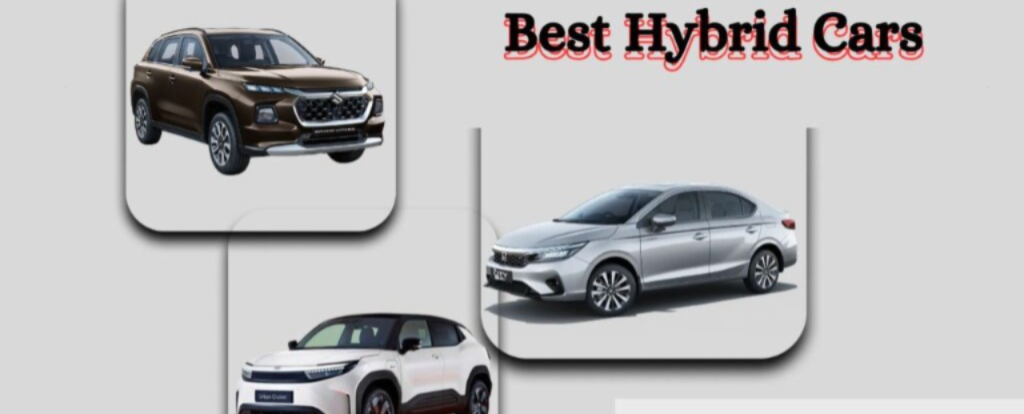
1) Maruti Suzuki Grand Vitara (Hybrid variants) — The practical hybrid for Indian families
If you want a tried-and-tested hybrid package backed by the largest dealer network in India, the Maruti Suzuki Grand Vitara is an easy place to start. Maruti’s strong hybrid programs (often marketed under the “Strong Hybrid” or “eHV”/“Smart Hybrid” family depending on the model/market timing) combine the familiar simplicity of a petrol engine with a well-engineered hybrid system that improves city mileage dramatically.
Inside the Grand Vitara you get a comfortable cabin that is sensibly laid out for family use. The vehicle’s ride and suspension tune tend to favour comfort over hard sportiness, which suits daily family use and long drives. The hybrid system helps especially in city conditions; you’ll notice the smoother restarts, reduced petrol consumption in stop-start traffic, and generally calmer NVH when the system manages low-speed driving on battery assist.
Value-wise, Grand Vitara’s hybrid trims normally sit comfortably under ₹20 lakh for many of the popular mid-level variants, making it a practical hybrid if you need space, low running costs, and the convenience of Maruti’s service network.
Who should buy it: Families that want an all-rounder with hybrid efficiency and simple ownership.
2) Maruti Suzuki Victoris (Hybrid) — A modern hatch/SUV alternative with strong hybrid tech
Victoris is Maruti’s new nameplate that sits in the lifestyle compact crossover space and often shares hybrid tech with the Grand Vitara line-up. Its strong hybrid variants are engineered for excellent urban efficiency and easy ownership.
The Victoris interior is stylish and contemporary, with a focus on infotainment and ergonomics that match urban buyers’ needs. The hybrid drivetrain makes the car whisper through traffic and keeps fuel bills down without the complexity of a plug-in. In many cities the mid and even higher trims of Victoris fall under the ₹20 lakh mark, which places it as a strong rival for buyers wanting modern looks, features and hybrid economy.
Who should buy it: Young families or professionals who want hybrid efficiency in a stylish compact package.
3) Toyota Urban Cruiser Hyryder — Toyota reliability meets hybrid know-how
Toyota’s long experience with hybrids shows up in the Urban Cruiser Hyryder. It offers a hybrid system (often sold in collaboration with Maruti Suzuki in India) that is familiar for its reliability, smoothness, and conservative but durable mapping. The Hyryder’s cabin is comfortable, and the car’s build quality tends to focus on long-term durability—something Toyota is known for globally.
When you drive the Hyryder, you’ll notice very smooth transitions between electric-assist and petrol engine modes. The regenerative braking behavior is well-calibrated for Indian traffic and it rewards city drivers with clear fuel gains. Pricing for many Hyryder hybrid trims sits under ₹20 lakh, which keeps it competitive against similar compact SUVs. For official trims and pricing ranges consult Toyota’s and Maruti’s listings and aggregated car sites.
Who should buy it: Buyers who value long-term reliability, consistent hybrid behavior, and a conservative family car ethos.
4) Maruti Suzuki Grand Vitara Victoris variants overlap — understanding the product stack
In 2026 Maruti’s product stack can feel a bit complex because models like Grand Vitara and Victoris might share platforms, engines and hybrid systems, yet target slightly different customers. Practically, that means you get a choice between slightly different packaging and styling with broadly similar hybrid efficiency across some shared powertrains.
Why mention this? Because for a buyer it means you should test-drive both if possible. One may offer a marginally softer ride or a slightly better rear-seat layout that matters more for your family’s needs; but both bring the advantage of good dealer reach and predictable maintenance. Check CarTrade and CarDekho variant pages for detailed specs and to compare features across trims.
Who should compare both: Buyers who want Maruti’s hybrid tech but are undecided between style and packaging.
5) Honda City Hybrid — efficient sedan with grown-up refinement
Honda’s hybrid package (as seen in the City Hybrid) blends a comfortable sedan character with notable fuel efficiency. The City Hybrid emphasizes calm, refined driving and is often a favorite for buyers who prefer sedans over crossovers.
The City Hybrid’s strengths are in its smooth power delivery, refined cabin, and very sensible fuel economy on mixed duty cycles. In 2026 top-level City Hybrid trims can be priced near the ₹20 lakh mark; however, select variants or dealer discounts may position the City Hybrid within your target budget in some cities. If you prefer a traditional sedan silhouette and long highway comfort along with hybrid frugality, the City Hybrid is a compelling choice.
Who should buy it: Sedan lovers who want refined hybrids for city and highway use.
6) Toyota Innova Hycross — when hybrid comfort for families matters (watch variant/price)
The Innova Hycross is Toyota’s premium family vehicle with hybrid options that push it beyond simple compact SUV duties. Depending on trims and the market, some lower-spec hybrid variants can sit around or slightly under ₹20 lakh, but many higher-spec models exceed that price band. If you’re shopping strictly under ₹20 lakh you may find entry-level Hycross hybrid trims qualifying, so check local pricing carefully.
What the Hycross gives you is large-car comfort, excellent seating flexibility, and a hybrid system tuned for stress-free cruising and long-term reliability. If your priorities are long trips, passenger comfort and Toyota’s known reliability, this is a hybrid worth considering if it fits your budget. For exact trim-by-trim pricing confirm on CarDekho or Toyota’s official pages.
Who should buy it: Buyers who need comfortable family transport and are willing to prioritize comfort over the smallest possible price tag.
7) Other strong contenders and notable mentions
Beyond the models above, there are a few other vehicles and new launches in 2026 that may flirt with hybrid technology and the ₹20 lakh threshold. Brands such as Hyundai and Kia are actively expanding their powertrain portfolios, and sibling models with mild-hybrid systems may be priced competitively in this bracket. Always watch new launches and mid-year updates — compact crossovers often get mild-hybrid options added to make them more attractive to city buyers. For the latest launches (including the new Seltos and other 2026 introductions) review detailed news and comparison pages.
Who should follow this: Buyers who want the newest tech and are ready to check dealer updates often before finalizing.
8) Real-world ownership: fuel economy, servicing and TCO (total cost of ownership)
One of the biggest questions is: “Will the hybrid actually save me money?” The honest, human answer is: it depends on your driving pattern. If you spend most of your time in city traffic, hybrids generally deliver substantial fuel savings because regenerative braking and electric-assist reduce petrol usage. If your weekly driving is mostly long highway runs at steady speeds, the hybrid advantage shrinks but still often gives a decent edge because hybrids are also tuned for efficient cruising.
Service networks matter a lot. Maruti and Toyota have excellent after-sales footprints in India; this reduces unplanned downtime and often yields predictable maintenance costs. Honda also offers strong service quality, though Honda’s pricing and dealer coverage can vary slightly by region.
When you calculate TCO, include fuel savings, periodic service costs (hybrid systems sometimes have higher initial parts costs but often similar periodic service items), insurance and expected resale. Hybrids can retain value well if the brand has a strong market reputation and if buyers trust the battery/EV tech under warranty.
9) Safety, features and why they matter more in hybrids today
Many hybrid models now come with good active safety features and driver aids because manufacturers use hybrid variants to upsell richer trim levels. You’ll often find multiple airbags, ABS with EBD, stability control, and sometimes ADAS features in higher trims. If safety is a major concern — for example, you drive with family in busy city traffic — it’s sensible to pick a hybrid trim with a strong passive and active safety kit even if it nudges the price upward.
Infotainment and comfort features are also more generous on hybrid trims, making them feel more premium — because manufacturers position hybrids as a higher-value, higher-margin offering.
10) How to choose the right hybrid for you — a gentle, practical buyer’s guide
First, be honest about your driving pattern. If you do 60–70% city driving, a hybrid’s benefits will show quickly. If you do mainly long highway trips, evaluate fuel-economy claims but don’t expect miracles.
Second, think about service and warranty. Maruti and Toyota hybrids benefit from widespread service networks and predictable battery warranties. Ask dealers for the hybrid battery warranty duration (many manufacturers offer long-term warranties on hybrid components).
Third, test-drive the powertrain — hybrids feel different. Check low-speed behavior, take note of how the car transitions between electric and petrol drive modes, and test regenerative braking behavior so you get used to one-pedal feel if present.
Fourth, factor resale. Hybrid models from big brands generally retain value better, but local demand matters; ask your dealer about used-hybrid market interest in your city.
Finally, compare on the net: car-journalism sites like carjd.com have easy-to-read comparison articles and practical buying tips that help you match trims and understand real costs. Use those alongside dealer price quotes.
Quick comparison matrix (how these hybrids differ in spirit — narrative form)
If I had to simplify it for a friend choosing a car, I’d say:
- Choose Maruti Grand Vitara or Victoris if you want the lowest headache of ownership and very good city mileage with the backing of India’s largest dealer reach.
- Choose Toyota Urban Cruiser Hyryder if you prefer Toyota’s conservative, long-term reliability and a mature hybrid feel.
- Choose Honda City Hybrid if you prefer a sedan with a smooth, refined drive and strong real-world efficiency.
- Consider Innova Hycross only if you need extra space and happen to find an entry-level hybrid trim within budget — otherwise it’s often better value as a slightly pricier purchase for long-term family comfort.
- Watch recent launches from Hyundai/Kia and other major players — they may add mild or strong hybrids into sub-₹20 lakh trims that make great sense for urban buyers.
Deep-dive ownership tips (what dealers sometimes don’t mention)
When buying a hybrid, ask the dealer these exact questions: What is the battery warranty period? Is hybrid battery replacement covered or subsidized after warranty expiry? How often does the hybrid system require special service (beyond oil and brake checks)? What local service centers are trained for hybrid-specific faults?
Request a real-world test drive on a route similar to your daily commute. Hybrids feel most useful where you will actually use them — the showroom drive might not show the real advantage if it’s mostly steady speeds.
Negotiate on on-road price, accessories and the first scheduled service package; sometimes dealers add accessories that don’t add daily value but do increase your purchase invoice.
Where to read verified, up-to-date comparisons (including the one-page checklists)
For side-by-side comparisons and buyer checklists, I recommend visiting carjd.com for clear, conversational buying guides (they often include variant-based comparisons and helpful tips).
Long FAQ — everything buyers ask (answers in plain language)
Q: Will a hybrid save me money on fuel?
A: If you drive a lot in city traffic, yes — hybrids shine in urban stop-start conditions because the electric motor and regenerative braking reduce petrol usage. For lots of steady-speed highway driving the savings are smaller but still present. Run the numbers: estimate your annual km, multiply by expected kmpl for petrol vs hybrid, and you’ll see the likely annual saving.
Q: Are hybrid batteries expensive to replace?
A: Battery replacement can be expensive, but manufacturers often provide long warranties (8–10 years or more for hybrid components in many cases). Also, hybrid batteries often last a long time if properly maintained. Check the warranty terms before buying.
Q: Do hybrids cost more for servicing?
A: Routine servicing is often similar to petrol cars, but some hybrid-specific checks may be required. The difference in routine cost is often small, and fuel savings usually offset extra service items over time.
Q: Can I drive a hybrid like a normal petrol car?
A: Yes. Hybrids are designed to be seamless. You do not need any special skills; just drive normally. Over time you might adapt to regenerative braking and the quieter low-speed behavior.
Q: Do hybrids perform worse on highways?
A: Not necessarily. Many hybrids are tuned to deliver strong mid-range torque for overtakes. The main difference is that on steady high-speed runs the electric assist contributes less, so the fuel economy advantage narrows compared with mixed or city driving.
Q: How important is the dealer network?
A: Very. A strong dealer and service network reduces downtime and ensures technicians know hybrid systems. Brands like Maruti and Toyota have mature networks in India, which is a big plus for hybrid buyers.
Q: Are there plug-in hybrids under ₹20 lakh?
A: In India plug-in hybrids (PHEVs) are rare at this price point. Most sub-₹20 lakh hybrid cars are self-charging (strong hybrids or mild hybrids). If you want a PHEV you’ll likely be looking at higher price brackets or imported models.
Q: Are hybrids reliable long-term?
A: Modern hybrid tech from major manufacturers has proven reliable globally. Longevity depends on maintenance, driving style and the quality of the manufacturer’s engineering. Toyota and Honda in particular have decades of hybrid experience, which is reassuring.
Q: Do hybrids have different insurance costs?
A: Insurance may be slightly higher depending on the manufacturer-declared value and the cost of hybrid components, but differences are usually modest. Always get insurance quotes from multiple providers before buying.
Q: Will hybrids get cheaper in the next 1–2 years?
A: Prices can soften as technology spreads and more models enter the market, but tax and localization factors also influence retail price. If you need a car now and the hybrid meets your needs, waiting may not be worth the uncertainty — but if you can wait for an imminent model launch or a seasonal discount period, you might find better deals.
Final thoughts — the concise bottom line
In 2026 the hybrid market under ₹20 lakh in India is practical and interesting. Maruti Suzuki’s hybrid offspring (Grand Vitara, Victoris), Toyota’s Hyryder and Toyota/Honda hybrids are strong choices because they mix real-world fuel savings, good features and strong service networks. Buyers who commute in cities stand to save the most; those who do a lot of highway miles should weigh fuel advantages carefully but still benefit overall from hybrid smoothness and refinement.