15 Jan 2026 • Payal
The Rise of Flex-Fuel Cars in India: Can Your Next Car Run on Ethanol?
Petrol is no longer the only future for Indian cars. With ethanol blending rising and flex-fuel technology gaining attention, the way we fuel our vehicles is slowly changing. This blog explains what flex-fuel cars really are, how ethanol works on Indian roads, and whether your next car can safely run on ethanol without compromising performance or reliability.
When you fill fuel at a petrol pump in India, you probably don’t think much beyond the price flashing on the screen. Petrol is petrol, right? But quietly, something big is changing behind the scenes. The fuel going into your car today is already different from what it was a few years ago, and in the coming years, it could change even more.
This change has a name that’s slowly entering everyday conversations: flex-fuel cars.
You may have heard politicians talk about ethanol blending, or car companies showcasing “ethanol-ready engines” at auto expos. You may have also seen headlines asking whether India can really move away from petrol. All of this leads to one simple, very human question: Can your next car actually run on ethanol? And should you care?
This blog answers that question honestly, without hype, and without confusing engineering language. We’ll talk about what flex-fuel cars really are, why India is pushing ethanol so hard, what it means for normal drivers, and whether flex-fuel cars are a practical future or just a policy experiment. We’ll also connect this naturally with carjd.com, because when a big shift like this is coming, buyers need clear comparisons, not marketing noise.
First, let’s clear the confusion: what is ethanol, really?
Ethanol is not some new lab-made fuel. It’s an alcohol-based fuel, usually produced from sugarcane, corn, or other plant materials. In simple terms, it’s fuel made from crops instead of crude oil.
India already uses ethanol today. If you’ve filled petrol recently, chances are it already contains ethanol. This is called ethanol blending. Right now, India has achieved E20, which means petrol can contain up to 20 percent ethanol and 80 percent petrol.
Most people don’t even notice this change because modern petrol cars are designed to handle low to moderate ethanol blends without drama. But flex-fuel cars take this idea much further.
What exactly is a flex-fuel car?
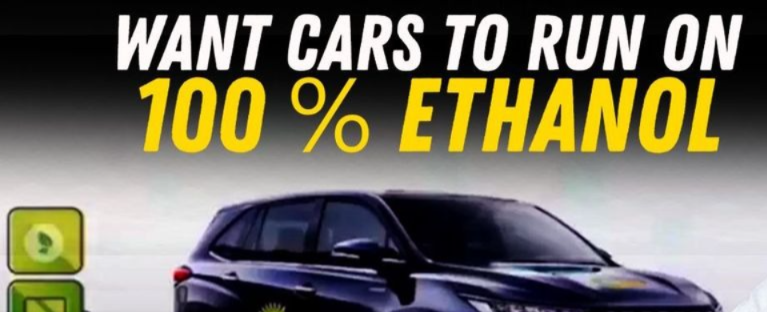
A flex-fuel car is a vehicle designed to run on multiple fuel mixtures, ranging from regular petrol to high-ethanol blends like E85 (which means 85 percent ethanol and 15 percent petrol).
In very simple words, a flex-fuel car doesn’t panic if the fuel composition changes. Its engine, fuel lines, seals, sensors, and software are designed to automatically adjust based on how much ethanol is in the fuel.
This flexibility is what gives flex-fuel cars their name.
You don’t need to flip switches. You don’t need to choose a mode. You just fill fuel, and the car adapts.
Why is India suddenly so serious about ethanol?
To understand the rise of flex-fuel cars, you need to understand India’s fuel problem.
India imports a huge amount of crude oil. This means:
- We spend massive foreign exchange every year
- Fuel prices are affected by global events
- Energy security is always a concern
Ethanol offers a partial solution.
Because ethanol is made from crops grown in India, it:
- Reduces oil imports
- Supports farmers and rural income
- Keeps fuel money circulating within the country
- Burns cleaner than pure petrol
This is why the Indian government has aggressively pushed ethanol blending targets and openly encouraged automakers to develop flex-fuel technology.
Flex-fuel cars are not being pushed because they sound futuristic. They’re being pushed because India needs fuel alternatives that work with existing engines and infrastructure.
Is ethanol actually better for the environment?
This is where things get nuanced.
Ethanol burns cleaner than petrol, producing lower carbon monoxide and particulate emissions. Because it comes from plants that absorb carbon dioxide while growing, ethanol is often described as more “carbon-neutral” than fossil fuels.
But ethanol is not perfect.
Growing crops for ethanol needs water, land, and energy. Transporting and processing ethanol also creates emissions. So ethanol is not a magic green fuel. It’s more like a step toward cleaner mobility, not the final answer.
Compared to petrol alone, ethanol blends generally reduce tailpipe pollution, especially in urban areas. For a country like India, where air quality is a daily concern, even incremental improvements matter.
How flex-fuel cars are different from normal petrol cars
From the outside, a flex-fuel car may look exactly like a regular petrol car. The real differences are hidden inside.
Flex-fuel cars use:
- Ethanol-resistant fuel lines and seals
- Special sensors to detect fuel composition
- Engine software that adjusts ignition timing and fuel injection
- Materials that prevent corrosion caused by alcohol
Why does this matter? Because ethanol behaves differently from petrol. It absorbs moisture, burns differently, and has a different energy content. A normal petrol engine not designed for high ethanol blends can suffer from reduced efficiency, starting issues, or long-term wear if used with high ethanol fuel.
Flex-fuel cars are built to handle all of this safely.
Will ethanol give less mileage than petrol?
This is one of the most common concerns, and it’s a valid one.
Ethanol contains less energy per litre than petrol. This means that, litre for litre, ethanol generally delivers lower fuel efficiency.
So yes, if you run your car on high-ethanol blends like E85, you can expect lower mileage compared to pure petrol.
But here’s the important part: ethanol is usually cheaper than petrol. The idea is that the lower cost per litre can balance out the lower mileage.
In real life, the savings depend on fuel pricing, driving style, and how much ethanol is in the blend. Flex-fuel cars give you the choice to use whatever blend is available and economical at the time.
Are flex-fuel cars already available in India?
As of now, flex-fuel cars are still at an early stage in India.
Several manufacturers have showcased flex-fuel prototypes and concept cars. Some have announced plans to introduce flex-fuel variants once fuel availability improves. Carmakers like Toyota, Suzuki, and others have publicly supported ethanol-ready engines and flex-fuel development.
The reason flex-fuel cars are not widespread yet is simple: fuel infrastructure.
There are still very few pumps in India that sell high-ethanol blends like E85. Without reliable fuel availability, selling flex-fuel cars at scale doesn’t make business sense yet.
But this is changing gradually, and the direction is clear.
How infrastructure decides the success of flex-fuel cars
A car is only as useful as the fuel you can put into it.
For flex-fuel cars to truly succeed in India:
- Fuel stations must offer multiple ethanol blends
- Quality and consistency of ethanol fuel must be ensured
- Pricing must remain attractive
- Awareness among drivers must improve
This won’t happen overnight. But remember, even CNG and electric vehicles took years before becoming mainstream.
Flex-fuel cars have one advantage: they don’t replace petrol; they coexist with it. Even if ethanol isn’t available, the car can run on petrol. That makes adoption easier and less risky for buyers.
How flex-fuel compares to electric and hybrid cars
Flex-fuel cars are not competing directly with electric vehicles. They are solving a different problem.
Electric cars focus on zero tailpipe emissions but need charging infrastructure and higher upfront costs. Hybrids focus on efficiency and lower emissions but still rely on petrol. Flex-fuel cars focus on fuel flexibility and energy security.
In India, where:
- Charging infrastructure is still growing
- Many people live in apartments without chargers
- Long highway travel is common
Flex-fuel cars offer a practical transition technology. They allow cleaner fuel usage without changing driving habits drastically.
What flex-fuel cars mean for everyday Indian buyers
For a normal buyer, flex-fuel cars are not about nationalism or policy targets. They are about choice.
A flex-fuel car means:
- You are not locked into one fuel type
- You can adapt to future fuel price changes
- Your car remains relevant as fuel norms evolve
- You participate in cleaner fuel adoption without lifestyle disruption
This flexibility is especially valuable in a country as diverse as India, where fuel availability and prices can vary widely.
Where carjd.com fits into this future
As flex-fuel cars begin to enter the Indian market, buyers will face confusion. Which cars support which blends? Which variants are ethanol-ready? How does mileage change? What about maintenance?
This is exactly where carjd.com becomes important.
carjd.com helps buyers compare cars, variants, features, and future-ready technologies in one place. As flex-fuel options grow, platforms like carjd.com will help translate policy announcements and technical terms into real buying decisions.
When the fuel landscape changes, information becomes just as important as infrastructure.
Will flex-fuel cars increase maintenance costs?
Flex-fuel cars are designed to handle ethanol safely, so they do not automatically mean higher maintenance costs. However, ethanol can be more corrosive if materials are not properly chosen. That’s why true flex-fuel vehicles use special components.
Maintenance costs will depend more on engine quality, service practices, and fuel quality than on ethanol itself. With proper engineering, flex-fuel cars can be just as reliable as petrol cars.
Are flex-fuel cars the final solution?
No. Flex-fuel cars are not the final destination of mobility.
They are a bridge.
They help reduce oil imports, support cleaner fuel usage, and give the industry time to transition toward more sustainable long-term solutions like electric, hydrogen, or advanced biofuels.
In a country like India, transitions work best when they are gradual, practical, and inclusive. Flex-fuel fits that philosophy well.
Should you wait for a flex-fuel car?
If you are buying a car today, you don’t need to panic or delay endlessly. Current petrol cars compatible with E20 fuel are already future-ready for the near term.
If you are planning a purchase in the next few years, keeping an eye on flex-fuel developments makes sense. When infrastructure improves and manufacturers launch proper flex-fuel models, they could become an attractive option for long-term ownership.
Tracking updates on carjd.com can help you stay informed without being overwhelmed.
Final thoughts: is ethanol the fuel of tomorrow?
Ethanol will not replace petrol overnight. But it will increasingly share space with it.
Flex-fuel cars represent adaptability, not disruption. They allow India to move forward without forcing sudden change on millions of drivers.
So when you ask, “Can my next car run on ethanol?” the more important question becomes: “Do I want a car that can adapt to the future?”
Flex-fuel cars suggest that the answer, for many Indians, will soon be yes.
Frequently Asked Questions (FAQs)
Q1 What is a flex-fuel car in simple terms?
A flex-fuel car is a vehicle that can run on petrol, ethanol-petrol blends, or high-ethanol fuel without any manual adjustment by the driver. The engine automatically adapts to the fuel mixture.
Q2 Can current petrol cars in India run on ethanol?
Most modern petrol cars in India can safely run on E20 fuel, which contains up to 20 percent ethanol. However, they are not designed for very high ethanol blends like E85.
Q3 Will ethanol damage my engine?
In a properly designed flex-fuel car, ethanol will not damage the engine. Problems only occur when high ethanol blends are used in engines not designed for them.
Q4 Does ethanol reduce mileage?
Yes, ethanol generally gives lower mileage per litre than petrol. However, ethanol is usually cheaper, which can offset the lower fuel efficiency.
Q5 Are flex-fuel cars available in India right now?
Flex-fuel cars are still limited in India, but many manufacturers are preparing for them. Wider availability will depend on fuel infrastructure and ethanol supply.
Q6 Are flex-fuel cars cheaper to run?
They can be, depending on ethanol pricing and availability. The cost benefit depends on how fuel prices are structured in your area.
Q7 Is ethanol better for the environment?
Ethanol burns cleaner than petrol and can reduce certain emissions. It is not perfect, but it is generally considered a step toward cleaner fuel usage.
Q8 Should I wait for a flex-fuel car?
If your purchase is immediate, current E20-compatible petrol cars are fine. If you’re planning long-term ownership, flex-fuel cars may be worth considering once infrastructure improves.
Q9 How can carjd.com help with flex-fuel car decisions?
carjd.com helps compare cars, variants, fuel technologies, and future-ready features so buyers can make informed decisions without confusion.