13 Jan 2026 • Payal
Best Ceramic Coating vs. PPF: Which Is Worth the Investment for New Cars?
Ceramic coating and PPF are the two most popular paint protection options for new cars. This blog explains their differences, costs, durability, and which option is worth the investment, helping car owners choose the right protection for their needs.
Buying a new car is an emotional moment. The shine, the smell, the flawless paint—everything feels perfect. Naturally, every new car owner wants to keep that “new car look” for as long as possible. This is where the big question comes in: Should you choose ceramic coating or PPF (Paint Protection Film)?
Today, ceramic coating and PPF are the two most popular paint protection options in India. But for most buyers, the decision is confusing. One is cheaper, one is expensive. One focuses on shine, the other on protection. Salespeople often push whichever option gives them higher commission, leaving buyers unsure.
Why Paint Protection Matters for New Cars
Modern car paints look glossy, but they are thinner and more delicate than older-generation paints. Environmental factors like sunlight, dust, pollution, bird droppings, tree sap, road debris, and even frequent washing slowly damage the paint surface.
In Indian conditions—where roads are dusty, parking is often outdoors, and weather is extreme—paint damage happens faster than people expect. Scratches, swirl marks, fading, and dullness can appear within months.
Paint protection is not about luxury anymore; it is about preserving value, reducing maintenance, and keeping your car looking fresh for years.
What Is Ceramic Coating?
Ceramic coating is a liquid polymer that is applied on the car’s paint surface. Once cured, it forms a hard, transparent protective layer that bonds with the paint.
The main purpose of ceramic coating is to enhance shine and make the surface hydrophobic, meaning water, dust, and dirt slide off easily. This makes the car easier to clean and gives it a glossy, showroom-like finish.
Ceramic coating does not make your car scratch-proof, but it does reduce minor swirl marks and light scratches caused by washing or dust wiping.
How Ceramic Coating Feels in Daily Use
After ceramic coating, your car looks noticeably shinier. Water beads up and rolls off quickly during rain. Dust does not stick easily, and regular washing becomes much easier.
For owners who enjoy washing their car at home or want low-maintenance shine, ceramic coating feels very satisfying. The car looks cleaner for longer periods, even in dusty conditions.
However, ceramic coating does not protect against stone chips, deep scratches, or door dents.
What Is PPF (Paint Protection Film)?
PPF is a thick, transparent polyurethane film applied over the car’s paint. Unlike ceramic coating, which is liquid-based, PPF is a physical layer that acts like armor for your car.
PPF is designed to absorb impact and prevent physical damage. It protects against stone chips, scratches, minor dents, road debris, and even careless door hits in parking areas.
High-quality PPF also has self-healing properties, meaning light scratches disappear when exposed to heat or sunlight.
How PPF Feels in Daily Use
Cars with PPF feel more “protected.” Owners worry less about highways, rough roads, or tight parking spaces. Stone chips that would normally damage paint are absorbed by the film instead.
However, PPF does not automatically give high gloss unless you choose a gloss PPF. Matte PPF can even change the look of your car entirely.
PPF requires professional installation, and poor-quality installation can result in visible edges or peeling over time.
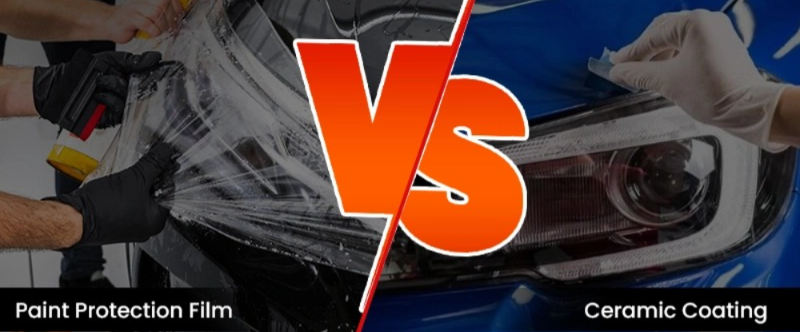
Ceramic Coating vs. PPF: Core Difference Explained Simply
The simplest way to understand the difference is this:
Ceramic coating is like a raincoat—it keeps your car clean and shiny.
PPF is like body armor—it protects your car from physical damage.
Ceramic coating focuses on appearance and ease of maintenance.
PPF focuses on protection and long-term paint safety.
They serve different purposes, even though both are called “paint protection.”
Cost Comparison: Ceramic Coating vs. PPF
Cost is one of the biggest deciding factors.
Ceramic coating is significantly more affordable. Depending on brand and number of layers, it usually costs much less than PPF. This makes it popular among budget-conscious buyers and first-time car owners.
PPF is expensive because of material cost, installation time, and skill required. Full-body PPF can cost several times more than ceramic coating.
Because of this, many owners choose partial PPF (only bumper, bonnet, mirrors) and combine it with ceramic coating for the rest of the car.
Durability and Lifespan
Ceramic coating typically lasts from one to three years depending on quality, maintenance, and driving conditions. It requires periodic maintenance washes and sometimes top-up coatings.
PPF can last five to seven years if installed properly and maintained well. It provides long-term protection, especially for high-usage vehicles.
If you plan to keep your car for many years, durability becomes an important factor.
Maintenance Requirements
Ceramic-coated cars are easier to clean, but they still require gentle washing methods. Improper washing can reduce the coating’s lifespan.
PPF-covered cars are also easy to maintain, but damaged film sections may need replacement. The good news is that replacing PPF is easier than repainting damaged panels.
Both options benefit from professional maintenance, but ceramic coating requires more frequent care.
Which One Is Better for Indian Roads?
Indian roads are unpredictable. Loose stones, tight traffic, careless parking, and poor road conditions are common.
If you drive mostly within the city and park indoors, ceramic coating may be sufficient.
If you frequently drive on highways, travel long distances, or park in open areas, PPF offers better peace of mind.
Indian conditions favor protection over shine, especially for expensive cars.
Does Ceramic Coating Increase Resale Value?
Ceramic coating helps maintain paint gloss, which can improve resale appeal. Buyers are more attracted to cars that look well-maintained.
However, ceramic coating alone does not prevent paint damage. Scratches and chips still reduce resale value.
PPF, on the other hand, preserves original paint condition much better, which can significantly impact resale price—especially for premium cars.
Should You Combine Ceramic Coating and PPF?
Many experts recommend combining both.
PPF can be applied to high-impact areas like the front bumper, bonnet, ORVMs, and door edges. Ceramic coating can then be applied over the remaining panels or even on top of PPF for added gloss and ease of cleaning.
This combination provides a balance of protection and appearance, without the high cost of full-body PPF.
Which Option Is Best for Budget Car Owners?
For hatchbacks and budget sedans, ceramic coating usually offers the best value. It improves appearance, reduces cleaning effort, and keeps costs under control.
PPF may not make financial sense for lower-priced cars unless the owner is extremely careful about long-term paint condition.
Budget-conscious buyers should focus on practical benefits, not marketing hype.
Which Option Is Best for Premium and Luxury Cars?
For premium cars, PPF is often worth the investment. The cost of repainting luxury cars is very high, and even small scratches are expensive to fix.
PPF protects the original paint, maintains factory finish, and provides long-term peace of mind. Many luxury car owners apply full-body PPF soon after delivery.
To explore premium car options and ownership insights, platforms like carjd.com help buyers compare cars, understand ownership costs, and make smarter long-term decisions.
Common Myths About Ceramic Coating and PPF
Many people believe ceramic coating makes cars scratch-proof. This is not true. It only protects against very minor swirl marks.
Another myth is that PPF ruins paint. In reality, high-quality PPF protects paint and can be removed safely without damage when done professionally.
Understanding facts helps avoid disappointment and wasted money.
Installation Quality Matters More Than Brand
Even the best ceramic coating or PPF can fail if installed poorly. Choosing an experienced installer is more important than choosing a popular brand.
Always ask about warranty, after-installation care, and maintenance guidelines before proceeding.
FAQs: Ceramic Coating vs. PPF
Q1 Is ceramic coating worth it for new cars?
Yes, if your priority is shine, easy maintenance, and budget-friendly protection.
Q2 Is PPF worth the high cost?
Yes, especially for premium cars, highway users, and owners who want maximum paint protection.
Q3 Can I apply ceramic coating over PPF?
Yes, ceramic coating can be applied over PPF to enhance gloss and ease of cleaning.
Q4 Does PPF turn yellow over time?
High-quality PPF resists yellowing, but poor-quality films may discolor.
Q5 Which is better for resale value?
PPF preserves original paint better and usually helps more with resale value.
Q6 How long should I wait after buying a new car?
Paint protection should ideally be done within the first few weeks of delivery.
Final Verdict: Which Is Worth the Investment?
There is no one-size-fits-all answer.
If you want shine, easier cleaning, and affordability, ceramic coating is a good choice.
If you want maximum protection, long-term paint safety, and peace of mind, PPF is the better investment.
Your decision should depend on how you use your car, where you drive, how long you plan to keep it, and your budget.
A new car deserves care, but smart care—not unnecessary expense.
And before choosing your next car or planning long-term ownership costs, platforms like carjd.com help you make informed decisions every step of the way.