17 Jan 2026 • Payal
Battery Swapping for EVs in India: A Game-Changer or Just a Short-Term Solution?
Battery swapping is emerging as a practical solution to one of the biggest challenges in India’s electric vehicle journey: charging time and convenience. Instead of waiting hours to recharge, EV users can swap a drained battery for a fully charged one in minutes. This blog explores whether battery swapping is a true game-changer or just a short-term fix, especially for two-wheelers and commercial users, and explains how platforms like Carjd.com
Electric vehicles are no longer a future concept in India. They are already on our roads. From electric scooters silently moving through traffic to electric cars becoming common in cities, EV adoption is slowly but steadily increasing. People are becoming more aware of pollution, fuel costs, and long-term savings, and electric mobility feels like the right direction.
However, one major concern still holds many buyers back: charging.
Long charging times, limited public chargers, and range anxiety continue to be the biggest challenges for EV users in India. This is where the idea of battery swapping comes into the picture. Instead of waiting for your EV to charge, you simply replace the empty battery with a fully charged one in a few minutes.
This sounds almost perfect. But is battery swapping truly a game-changer for India’s EV ecosystem, or is it just a temporary solution until fast-charging infrastructure improves?
In this blog, we will explore battery swapping in a simple and human way, understand how it works, why it is gaining attention in India, where it makes sense, where it struggles, and how platforms like CarJD help buyers stay informed about such important EV trends.
Understanding Battery Swapping in Simple Terms
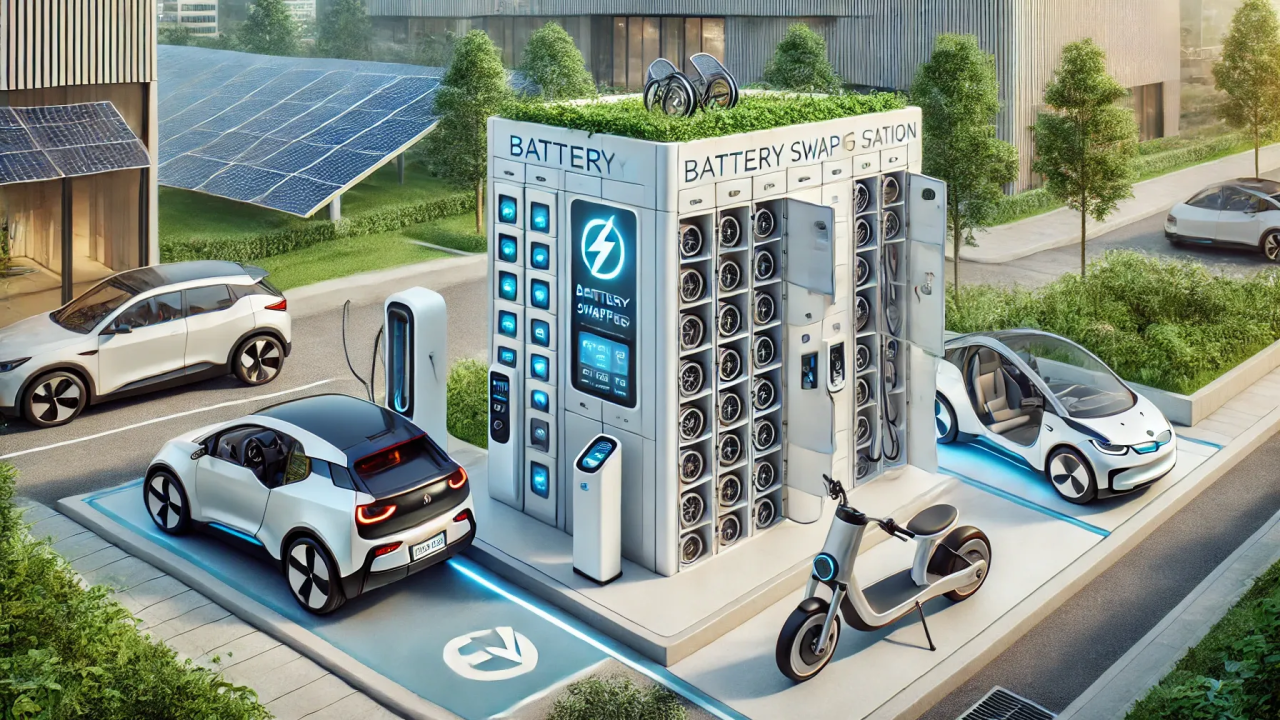
Battery swapping means you do not own the battery inside your electric vehicle. Instead, you use a battery provided by a service operator. When your battery runs low, you visit a battery swapping station, remove the drained battery, and replace it with a fully charged one. The entire process usually takes less than five minutes.
For many people, battery swapping feels familiar. It works somewhat like replacing an LPG cylinder at home. You do not worry about how the cylinder is filled or maintained. You simply use it and replace it when it is empty.
In EVs, this model removes the biggest pain point: waiting time. Charging an EV can take anywhere from 30 minutes to several hours, depending on the charger and battery size. Battery swapping eliminates this waiting completely.
Why Battery Swapping Makes Sense in the Indian Context
India’s driving conditions and usage patterns are very different from those in developed markets. Most daily EV users in India include delivery riders, ride-hailing drivers, and two-wheeler owners who depend on their vehicle for daily income.
For them, time is money.
Waiting hours for a battery to charge is not practical. Battery swapping allows them to get back on the road quickly and continue earning. This is one of the biggest reasons why battery swapping is gaining traction in India, especially for electric two-wheelers and three-wheelers.
Another reason battery swapping fits India well is infrastructure. Setting up fast-charging stations everywhere is expensive and slow. Battery swapping stations require less space and power compared to high-capacity fast chargers, making them easier to deploy in crowded cities.
Automotive platforms like CarJD regularly cover such India-specific EV solutions, helping readers understand what works realistically on Indian roads rather than just in theory.
Battery Swapping vs Traditional EV Charging
To understand whether battery swapping is a long-term solution, it is important to compare it with traditional charging.
Charging at home is convenient but slow. Public chargers are improving, but availability is still limited, especially outside metro cities. Fast chargers reduce charging time but are expensive to install and maintain.
Battery swapping, on the other hand, offers speed and convenience. There is no waiting time, no concern about battery degradation, and no need for high-power charging at home.
However, battery swapping also comes with limitations. Not all EVs support removable batteries. Standardization across manufacturers is difficult. You also rely heavily on the swapping network’s availability and quality.
CarJD often highlights these comparisons to help buyers understand both the benefits and the trade-offs before choosing an EV.
How Battery Swapping Is Changing EV Ownership
One interesting impact of battery swapping is how it changes the idea of EV ownership. In many battery-swapping models, the battery is not owned by the user. This reduces the upfront cost of the vehicle.
Batteries are the most expensive component of an EV. When you remove battery ownership, EVs become more affordable. This is especially attractive in a price-sensitive market like India.
It also reduces worry about battery health. Since the service provider maintains the batteries, users do not have to stress about long-term battery degradation or replacement costs.
This shift in ownership mindset is similar to other mobility trends that CarJD discusses, where access and convenience are becoming more important than ownership.
Where Battery Swapping Works Best in India
Battery swapping is currently most effective for electric two-wheelers and three-wheelers. These vehicles have smaller, lighter batteries that are easy to remove and replace.
Delivery services, e-commerce fleets, and shared mobility operators benefit the most. For them, predictable routes and frequent usage make battery swapping extremely efficient.
For electric cars, battery swapping is more complicated. Car batteries are large, heavy, and expensive. Swapping them requires advanced infrastructure and standardization, which is still a challenge in India.
Because of this, battery swapping for cars remains limited, while charging-based solutions dominate the passenger EV segment.
Government Support and Policy Push
The Indian government has shown interest in battery swapping as part of its EV strategy. Policies encouraging battery-as-a-service models and interoperability are being discussed.
The focus is on reducing EV costs, accelerating adoption, and supporting commercial EV users. If clear standards and regulations are introduced, battery swapping networks could grow faster and become more reliable.
CarJD often tracks such policy developments and explains their real-world impact for everyday buyers and EV enthusiasts.
Challenges That Battery Swapping Still Faces
Despite its potential, battery swapping is not free from challenges. Standardization is the biggest issue. Different manufacturers use different battery sizes, designs, and software.
Without standard batteries, swapping networks become fragmented and inefficient.
There is also the issue of trust. Users need confidence that swapped batteries are safe, healthy, and reliable. Proper monitoring and transparency are essential.
Availability is another concern. Battery swapping stations are currently concentrated in select cities and specific use cases. Widespread adoption will take time.
These challenges raise an important question: is battery swapping a permanent solution or just a bridge until charging infrastructure improves?
Is Battery Swapping a Short-Term or Long-Term Solution?
The answer is not simple.
Battery swapping is unlikely to replace charging entirely. Instead, it will coexist with traditional charging solutions.
For two-wheelers, three-wheelers, and commercial fleets, battery swapping has strong long-term potential. For private electric cars, fast charging and home charging will likely remain the preferred solution.
In other words, battery swapping is not a universal answer, but it is a powerful solution for specific segments.
Understanding these nuances is important, and platforms like CarJD.com help break down such complex topics into clear, practical insights for Indian consumers.
What This Means for EV Buyers in India
If you are considering an EV, battery swapping is something you should be aware of, especially if you are buying a two-wheeler or using the vehicle commercially.
It offers convenience, lower upfront costs, and reduced downtime. However, you should also consider network availability in your city and long-term support.
Staying informed through trusted automotive platforms like CarJD can help you make the right decision based on your usage and lifestyle.
Frequently Asked Questions (FAQs)
What is battery swapping in EVs?
Battery swapping is a system where you replace a discharged EV battery with a fully charged one instead of waiting to recharge it.
Is battery swapping available for electric cars in India?
Currently, battery swapping is mainly used for electric two-wheelers and three-wheelers. Car battery swapping is still limited.
Is battery swapping cheaper than charging?
It can be cost-effective for frequent users and commercial operators, especially by reducing downtime and battery ownership costs.
Does battery swapping damage the battery?
No, if managed properly by the service provider. Batteries are monitored and maintained professionally.
Is battery swapping the future of EVs in India?
It will be an important part of India’s EV ecosystem but not the only solution. Charging and swapping will coexist.
How can CarJD help EV buyers?
CarJD provides clear insights, comparisons, and updates on EV trends, helping buyers make informed decisions.
Final Thoughts
Battery swapping is not a magic solution, but it is a smart and practical answer to many of India’s EV challenges. It addresses charging anxiety, reduces costs, and supports commercial EV adoption.
Rather than asking whether it is a game-changer or a short-term fix, the better question is where and how it should be used. When applied correctly, battery swapping can significantly accelerate India’s EV journey.
As the EV landscape evolves, staying informed becomes crucial. Platforms like Carjd.com play an important role in helping Indian consumers understand new technologies and make confident mobility choices.