15 Jan 2026 • Payal
ADAS Level 2 in India: A Gimmick or a Life-Saver? Top Cars with Best Safety Tech.
ADAS Level 2 is being promoted as the future of car safety in India, but is it really a life-saver or just smart marketing? With Indian roads full of unpredictability, this blog breaks down how ADAS actually works in real driving conditions, where it helps, where it struggles, and which cars in India genuinely offer the best safety technology today.
India’s roads can feel like a living organism. One minute you’re cruising on a smooth expressway, and the next you’re negotiating a sudden pothole, a wrong-side bike, a stray animal, an auto that stops without warning, and a pedestrian who appears from nowhere. That’s exactly why ADAS Level 2 has become one of the most talked-about safety features in India right now. Some people call it the future. Others call it a marketing gimmick. The truth, like most things on Indian roads, sits somewhere in the middle.
So let’s talk about it properly: Is ADAS Level 2 in India actually a life-saver, or is it just a feature you’ll show off once and then switch off forever? And if you do want it, which cars in India genuinely offer the best safety tech for real-world driving?
This is a complete, human-friendly guide meant for everyday buyers and families. And yes, we’ll connect it naturally with carjd.com, because when you’re comparing cars, variants, and safety features, you need a place where the research becomes practical, not confusing.
ADAS Level 2, explained like you’re talking to a friend
ADAS stands for Advanced Driver Assistance Systems. Think of it as a co-driver that helps you avoid certain mistakes and reacts faster than humans in some situations. “Level 2” is the stage where the car can assist with steering and speed at the same time, but it still requires you to stay alert, keep your hands on the wheel (or at least be ready), and take control instantly when needed.
In simple terms, Level 2 ADAS usually means the car can do two broad things: it can help you maintain distance from the vehicle ahead using adaptive cruise control, and it can help you stay within lane markings using lane keep and lane centering features. Along with this, it commonly adds systems like automatic emergency braking, forward collision warning, and sometimes blind-spot alerts depending on the car and variant.
Many manufacturers in India now advertise “Level 2” or even “Level 2+” ADAS suites as a major selling point, and you’ll see terms like Hyundai SmartSense, Honda SENSING, Kia DriveWise, Tata ADAS, MG’s Autonomous Level 2 features, and Mahindra’s Level 2 ADAS.
But here’s the key: Level 2 is not self-driving. It’s not a robot chauffeur. It’s a safety assistant that works best when you treat it like a helper, not a replacement for skill.
Why ADAS is getting popular in India right now
India’s car buyers have matured a lot. A few years ago, people argued about mileage and touchscreen size. Now more people are asking about airbags, ESP, body strength, crash ratings, 360 cameras, and ADAS. This shift is happening because real-world driving has become more intense, highway speeds are higher, and traffic density has increased almost everywhere.
Another reason is simple competition. Car companies need something “new” to justify feature upgrades in facelifts, mid-life updates, and variant reshuffles. ADAS fits perfectly because it sounds futuristic and premium, and it genuinely can reduce accident risk when used correctly.
And finally, ADAS is spreading into more affordable segments. Media lists and expert roundups show ADAS moving down the price ladder, with more cars offering some form of Level 2 assistance under or around the mid-range budget.
So… is ADAS Level 2 in India a gimmick or a life-saver?
Let’s be honest: it can be both, depending on your expectations and how you use it.
When it feels like a gimmick
ADAS can feel pointless if you drive mostly in dense city traffic with unpredictable lane discipline, because systems like lane centering depend heavily on clear lane markings. In many Indian cities, lane markings are faded, broken, or simply ignored. In those conditions, lane keep assist can behave inconsistently, and you may find yourself switching it off just to keep driving peacefully.
Some drivers also buy an ADAS car thinking it will behave like a fully autonomous vehicle. Then they get frustrated when it beeps, warns, brakes unexpectedly, or disengages at the wrong time. This happens because the system is designed to be cautious, and it will sometimes react to complex situations more aggressively than a human would.
When it becomes a life-saver
Where ADAS becomes truly valuable is in the moments humans are most likely to fail: fatigue, distraction, misjudgment, or delayed reaction.
If you’ve ever had a “that was close” moment on a highway because the vehicle ahead braked suddenly, you already understand the value of forward collision warning and automatic emergency braking. Those extra milliseconds can matter.
If you’ve ever felt your attention dip during a long drive, you’ll appreciate the safety net of lane departure warning and lane keep assist (when lane markings are clear).
If you drive often on expressways, ring roads, or predictable highways, adaptive cruise control can reduce stress and keep safer following distances than many people maintain naturally.
This is why calling ADAS a gimmick is unfair. It’s real safety tech. But calling it “self-driving” is also unfair. The truth is more grounded: ADAS is a strong safety assistant that needs the right environment and a responsible driver.
ADAS in India: what works well, and what struggles
In India, ADAS performs best in situations where the road environment is structured. On well-marked expressways and open highways, systems like adaptive cruise control and lane centering can feel smooth and genuinely helpful. That’s why many brands showcase ADAS demonstrations in controlled highway-like conditions.
However, it struggles in environments with chaotic merging, unclear lane markings, heavy pedestrian crossings, and unpredictable obstacles. It’s not “bad”; it’s simply designed for a world where traffic behavior is more standardized.
This is also why you should treat ADAS as part of a larger safety picture. A truly safe car is not only ADAS. It’s strong structure, good brakes, stability control, quality tyres, correct seating position, and responsible driving habits. ADAS is the extra layer, not the whole cake.
The safety tech beyond ADAS that matters just as much
Before we jump into the best ADAS cars, it’s important to understand something many people miss: ADAS is not the same as “overall safety.” A car can have ADAS and still not be the safest choice if the fundamentals aren’t strong.
When you shop via carjd.com, the smart approach is to evaluate the full safety package: airbags, stability control, braking performance, visibility, tyre size, and yes, ADAS too. ADAS helps avoid crashes, but fundamentals help protect you if a crash happens.
Top Cars in India with the Best ADAS Level 2 Safety Tech
Now let’s get practical. Below are some of the most relevant, popular, and well-known cars in India that offer Level 2 ADAS (or brand-declared Level 2/Level 2+) along with strong safety tech. The goal here is not to overwhelm you with endless model names, but to highlight options people actually cross-shop and buy, especially if you’re browsing comparisons and variants on carjd.com.
Honda City (and City e:HEV): the calm, intelligent ADAS experience
If you want ADAS that feels mature and not overly dramatic, Honda’s implementation is widely respected. The Honda City and City e:HEV highlight Honda SENSING, which Honda describes as an advanced driver assistance system designed to help minimize accident risk.
What makes City’s ADAS appealing is that it matches the personality of the car: smooth, predictable, and confidence-building for highway use. The City is also a favorite among people who do intercity travel and want sedan comfort along with modern safety tech, especially in a segment where many buyers still ignore safety completely.
If you’re someone who wants ADAS for family highway trips more than for city commuting, the City remains one of the most sensible places to start your shortlist.
Honda Elevate: SUV practicality with Honda SENSING
For buyers who want a practical SUV stance but still want a refined ADAS suite, Honda Elevate is a strong name to consider. Honda clearly positions Honda SENSING on the Elevate as a system that assists safe driving and can intervene to avoid or reduce collision severity in some situations.
In real terms, Elevate is attractive because it combines daily usability with safety assistance that can be meaningful on highways and ring roads. If your family wants a comfortable SUV, not too complicated, and you want ADAS mainly for highway support, Elevate fits that “simple but smart” use case.
Hyundai Creta: the mainstream ADAS SUV that everyone talks about
Hyundai Creta is one of the most mainstream SUVs in India, and Hyundai explicitly highlights Hyundai SmartSense Level 2 ADAS as part of the safety narrative.
This matters because when a mass-market bestseller offers ADAS, ADAS stops being a luxury gimmick and starts becoming normal. Creta’s ADAS presence pushes the entire segment to upgrade safety tech, which is good for everyone.
If you’re someone who wants ADAS but also wants the widest service network comfort and broad resale familiarity, Creta becomes a very obvious contender. For many families, it’s the “safe choice” not only because of features, but because it’s a product they see everywhere and feel confident owning.
Kia Seltos: feature-rich ADAS with a premium feel
Kia’s Seltos is another heavy-hitter, and Kia emphasizes ADAS Level 2+ and a large set of autonomous safety features in its messaging.
Seltos appeals to people who want a premium cabin, strong road presence, and a long features list, while also wanting modern driver assistance. In practice,
Seltos is often cross-shopped directly against Creta, and for many buyers the decision comes down to design preference, variant pricing, and which ADAS package feels more “complete” for their usage.
If you’re using carjd.com to compare variants, Seltos is one of those cars where you should pay close attention to which trims include which ADAS features, because the feature availability can be variant-specific.
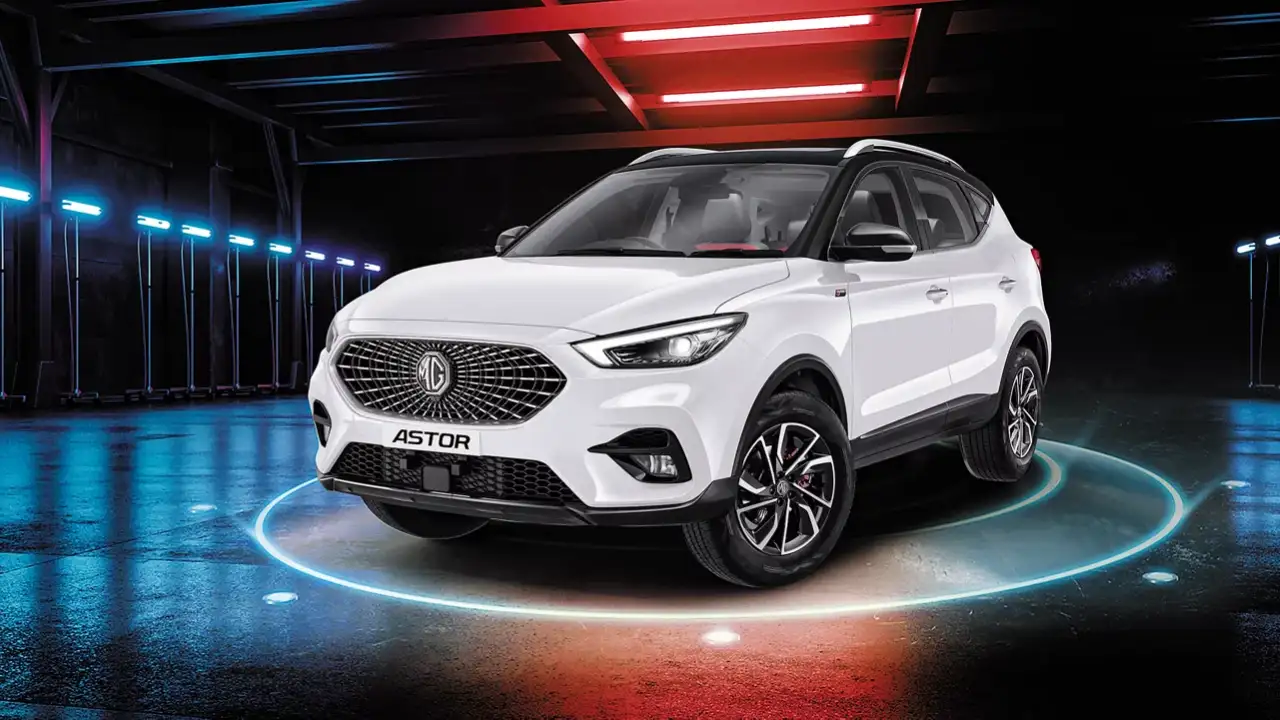
MG Astor: one of India’s most ADAS-focused mainstream SUVs
MG has been one of the brands pushing ADAS loudly in India, and on the Astor, MG specifically talks about Autonomous Level-2 (ADAS) technology with multiple Level-2 features.
Astor became popular among buyers who wanted to experience ADAS without jumping into expensive luxury brands. The car’s identity is closely tied to “tech + safety,” and for many people, Astor feels like a straightforward way to get Level 2 assistance as a major part of the purchase decision.
If your priority is “I want ADAS as a central feature, not as a bonus,” Astor is one of the most relevant names to evaluate.
Mahindra XUV700: ADAS in a powerful, highway-friendly package
Mahindra’s XUV700 has been widely associated with offering Level 2 ADAS, and Mahindra itself has described it as being equipped with a Level 2 ADAS suite with features such as adaptive cruise control, lane-keeping assist, automatic emergency braking, and traffic sign recognition.
XUV700 is particularly relevant for families and long-distance drivers because it’s positioned as a strong highway machine. The ADAS suite in a big SUV like this can be meaningful on long drives where fatigue is real. It’s also a car where buyers often prioritize safety and capability together, which is exactly how safety tech should be approached.
Tata Safari (and Harrier): ADAS Level 2+ entering Tata’s flagship space
Tata’s newer updates have put serious attention on safety tech, and Tata’s Safari page highlights ADAS (Level 2+) and multiple safety features including adaptive cruise control with stop & go, lane keep assist, and autonomous emergency braking, among others.
This is important because it brings ADAS into a very Indian “family SUV” context. Safari and Harrier buyers often care about presence, comfort, and family practicality. Adding ADAS into this mix signals that safety assistance is becoming a mainstream expectation even in large, rugged, Indian-brand SUVs.
There have also been reports of updates to the ADAS feature set on Harrier and Safari, including lane-keeping assist and adaptive steering assist with lane centering.
Hyundai Verna: ADAS coming to sedans in a big way
If SUVs aren’t your thing and you still love sedans, the Hyundai Verna is often referenced as one of the more affordable ways to get Level 2 ADAS in a sedan format, with media coverage highlighting its Level 2 ADAS availability in top trims.
Verna’s relevance is simple: it shows that ADAS is not restricted to premium SUVs anymore. Sedans can be tech-packed and safety-aware too, and for highway driving, sedans can actually feel more stable and efficient than many SUVs.
“Top cars” is not enough. You also need “best ADAS behavior for your use.”
Here’s the honest way to choose ADAS in India:
If your driving is mostly highway and expressway, ADAS can genuinely feel like a life-saver and stress-reducer, especially adaptive cruise control and emergency braking systems.
If your driving is mostly city chaos, ADAS may feel inconsistent and noisy, and the biggest real safety gains might come from basics like good visibility, strong brakes, stability control, and attentive driving.
This is why a smart buyer uses ADAS as a deciding factor only after they’ve shortlisted cars that already make sense on space, comfort, reliability, and budget. That’s exactly where carjd.com fits into the journey: you shortlist, compare variants, understand features, and then decide what safety tech is truly worth paying for.
How to use ADAS safely in India (so it doesn’t become annoying or risky)
A lot of people judge ADAS after one bad experience. Often that “bad experience” happens because the driver uses ADAS without understanding what it expects.
ADAS needs you to keep your attention high. It needs you to read the road like you always do. It needs you to remember that lane centering won’t work properly on faded markings. It needs you to understand that emergency braking can trigger if the system thinks a collision is likely, even if you think you have enough space.
When you treat ADAS like a “backup brain,” it becomes helpful. When you treat it like a “driver replacement,” it becomes dangerous.
The healthiest mindset is simple: ADAS reduces risk; it does not remove risk.
What ADAS Level 2 can realistically prevent on Indian roads
ADAS can help prevent certain common accident patterns, especially on highways. Rear-end collisions due to late braking are one of the most common real-world crash types in many places, and forward collision warning with AEB can reduce the likelihood or severity of these incidents. It can also help with unintended lane drift due to fatigue, which is a major cause of late-night highway crashes.
But ADAS cannot fix everything. It can’t guarantee perfect detection in all weather. It can’t handle every unpredictable pedestrian scenario. It can’t “understand” Indian traffic culture the way a human does. So when people call it a gimmick after seeing it fail once, that judgment is usually too harsh. When people call it a life-saver without acknowledging limitations, that judgment is too optimistic.
In reality, it’s a safety net, not a superhero.
FAQs: ADAS Level 2 in India
Q1 Is ADAS Level 2 the same as self-driving?
No. ADAS Level 2 is not self-driving. It can assist with steering and speed under certain conditions, but the driver remains fully responsible and must stay alert and ready to take over instantly. Level 2 systems are designed to assist, not replace, human driving.
Q2 Why do some people say ADAS is a gimmick in India?
People call it a gimmick because Indian driving conditions can confuse or limit ADAS performance. In many places, lane markings are unclear, traffic behavior is unpredictable, and the system may beep too often or disengage frequently. If someone expects it to work like a self-driving feature in chaotic city conditions, disappointment is common. That doesn’t mean the tech is fake; it means expectations need to match reality.
Q3 Can ADAS Level 2 actually save lives in India?
Yes, it can reduce the risk of certain accidents, especially highway rear-end collisions and fatigue-related lane drifting, by offering forward collision warnings, automatic emergency braking, and lane assistance. It can also reduce stress during long drives through adaptive cruise control in structured traffic environments.
Q4 Which ADAS features matter the most for Indian buyers?
For most Indian buyers, the most meaningful features tend to be forward collision warning with automatic emergency braking, adaptive cruise control for highways, and lane departure warning for fatigue reduction. Lane centering can be very helpful on expressways with clear lane markings, but it can feel inconsistent in poorly marked city roads. The usefulness depends heavily on where you drive most.
Q5 Do all ADAS cars in India offer the same features?
No. Even if two cars claim “Level 2 ADAS,” the feature set, tuning, sensor quality, and variant availability can differ a lot. For example, brands describe their suites differently, such as Hyundai SmartSense Level 2 ADAS, Honda SENSING, Kia’s ADAS Level 2+ messaging, MG’s Autonomous Level-2 features, or Tata’s Level 2+ ADAS mentions. Always check the exact variant feature list before buying.
Q6 Which cars in India are known for offering Level 2 ADAS today?
Popular examples include models like Hyundai Creta with SmartSense Level 2 ADAS, Kia Seltos with ADAS Level 2+ messaging, MG Astor with Autonomous Level-2 features, Honda City and Honda Elevate with Honda SENSING, Mahindra XUV700 with Level 2 ADAS, and Tata Safari with ADAS (Level 2+).
Q7 Is ADAS worth paying extra for?
It can be worth it if you do frequent highway driving, long-distance trips, or late-night travel, because that’s where fatigue and reaction-time delays are more likely. If your driving is mostly short city trips in chaotic traffic, ADAS may feel less useful, and your money might be better spent on overall safety fundamentals and a car with a strong, stable driving package.
Q8 Can I rely on ADAS to brake every time?
You should never rely on it as the primary plan. Automatic emergency braking is designed as a last-resort intervention, and real-world conditions can affect detection. Treat it as a backup that might help reduce impact severity or avoid a crash in some cases, but always drive as if you are fully responsible for braking.
Q9 Does ADAS increase repair and maintenance costs?
ADAS-equipped cars can require additional calibration if sensors or cameras are disturbed, especially after windshield replacement, bumper repairs, or alignment changes. It doesn’t automatically mean huge costs, but it does mean you should use proper service and avoid careless modifications that interfere with sensors. This is also why choosing a brand with strong service support matters.
Q10 How does carjd.com fit into the ADAS buying decision?
ADAS is a feature that varies by variant, and variant confusion is one of the biggest reasons people buy the wrong trim. carjd.com can fit naturally into this journey by helping you compare cars and variants, check which trims include ADAS, understand feature differences, and make a decision based on real usage rather than hype.
Final verdict: ADAS Level 2 in India is not magic, but it’s not a gimmick either
If you want the simplest truth, it’s this: ADAS Level 2 can genuinely reduce risk, but only when the driver uses it correctly and the environment supports it. In India, it shines brightest on expressways and structured highways, and it becomes less predictable in chaotic city conditions. The buyers who benefit the most are the ones who understand what it can and cannot do.