21 Jan 2026 • Payal
Toyota Urban Cruiser EV — Is This the Most Reliable Electric SUV Coming in 2026?
Toyota’s Urban Cruiser EV is set to arrive in 2026 with big promises around range, durability, and long-term ownership. This blog takes a closer look at whether it could be the most reliable electric SUV of its time, breaking down battery options, real-world usability, ownership benefits, and Toyota’s engineering approach—while also guiding buyers with practical insights and comparisons from platforms like CarJD.com.
The arrival of the Toyota Urban Cruiser EV (marketed as the Urban Cruiser Ebella in some regions) has stirred a lot of conversation: exciting specs, long claimed ranges, Toyota’s reputation for durability — and a natural question for buyers thinking ahead to 2026: Is this the most reliable electric SUV coming this year?
In this long, plain-spoken guide I’ll walk you through what the Urban Cruiser EV actually offers, what “reliability” means for an electric vehicle today, how Toyota’s decisions around batteries and warranties affect real ownership, how it compares (in practical owner terms) with other 2026 EVs, and how to think about dependability when you’re choosing a new electric SUV. I’ll also tie in a realistic note from reviewers (including coverage at leading auto sites) and point you toward useful follow-ups on specialist sites such as CarJD.com if you want quick comparison checklists.
1) What is the Toyota Urban Cruiser EV? A quick, friendly intro
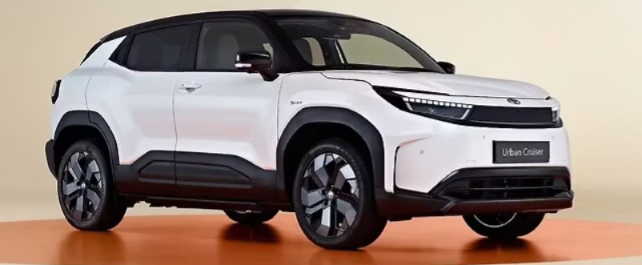
The Urban Cruiser EV — sometimes referred to by Toyota as the Urban Cruiser Ebella in certain markets — is Toyota’s more mass-market, compact all-electric SUV aimed at buyers who want a familiar SUV shape with a practical EV powertrain. For many markets it’s a close technical relative (a badge-engineered sibling) of the Maruti Suzuki e-Vitara / e-Vitara-type architecture: essentially Toyota and Suzuki have leveraged shared EV engineering to get a competitive product into showrooms more quickly. Official launch and booking details were widely reported when Toyota opened bookings and revealed features.
What matters for buyers: Toyota is positioning this model as practical, well-equipped, and engineered with real-world families and daily driving in mind — not as an exotic, ultra-expensive halo EV. That positioning itself is a positive for reliability because Toyota tends to tune mass-market models to be robust and well-supported by its service network.
2) The headline specs that matter to reliability (battery sizes, range, warranty)
When people ask “is it reliable?” the most important technical facts are often battery chemistry, battery capacity options, the claimed range, and manufacturer warranty / care programs. Here’s what Toyota has announced or that reputable outlets report:
- Two battery pack options are expected in many markets — a smaller ~49 kWh pack and a larger ~61 kWh pack — giving choices for buyers who prefer lower purchase cost or longer range.
- Claimed range: the higher capacity pack is being reported with very high ARAI/WLTP values in some markets — figures in the ballpark of 500+ km have been published (for example, some Indian reports cite an ARAI figure up to ~543 km for a large pack). As always, real-world range will be lower than lab figures, but Toyota’s use of efficient packaging and single-motor setups means realistic day-to-day range should be competitive.
- Warranty and ownership support: Toyota’s launches have emphasized customer-friendly ownership options such as long battery warranties (8 years in some markets/reports), buyback or Battery-as-a-Service (BaaS) options, and other incentives that reduce perceived ownership risk. These support programs reduce financial exposure if battery capacity falls unexpectedly, which directly improves practical reliability from an owner's viewpoint.
Why these matter: battery chemistry and warranty influence two of the biggest reliability concerns for EV owners — long-term battery degradation and cost/availability of replacement parts or battery servicing. Car manufacturers who offer long battery warranties and flexible ownership options make the ownership experience less risky for early adopters.
3) Battery chemistry and Toyota’s conservative choices — why that helps reliability
Toyota’s product statements and several credible auto outlets have noted Toyota’s tendency to favor durable, cost-effective battery chemistries where appropriate, and to back batteries with formal care programs. Even if exact chemistry differs by region and variant, Toyota’s global messaging around this model emphasizes durability and battery longevity rather than extreme energy density at any cost. For instance, coverage of Toyota’s Urban Cruiser indicates Toyota’s careful approach to battery design and a Battery Care Program intended to protect capacity retention over many years.
Why chemistry matters in plain words: some battery types (e.g., certain NMC chemistries) can offer high range but require more careful thermal management; other chemistries such as LFP (lithium iron phosphate) are heavier for the same energy but degrade more slowly and are chemically more stable. A car engineered around a chemistry that prioritizes longevity can feel more reliable after a few years of daily use — fewer range surprises, less risk of unexpected battery replacements and cooler behavior in hot climates.
Bottom line: Toyota’s engineering conservatism — choosing robust thermal systems, tested battery packs, and warranty backing — directly improves the practical reliability that everyday owners experience.
4) Design and hardware: simple systems tend to be more reliable
One less glamorous but very important reliability fact about modern EVs is this: simplicity and well-tested components equal fewer failure points.
Toyota’s Urban Cruiser EV is built to be a mass-market SUV: compact platform, front-motor layouts for most trims, shared architecture with an existing sibling model. That kind of approach usually uses well-understood electric motors, standardised cooling systems and tested control software — which helps dealers and technicians service cars easily and reduces the chance of obscure early faults.
In contrast, niche EVs that push new, unproven architectures or exotic features often face teething issues in the first year or two. Toyota’s path of using a shared, tested platform — and leaning on a deep service network — lowers the odds of owner headaches and makes the Urban Cruiser an attractive choice for people who put reliability above flash.
5) Software, ADAS and electronics: reliability is as much about updates as components
Reliability isn’t only mechanical. Today’s cars are computers on wheels: infotainment systems, driver-assistance (ADAS), and the car’s control software all have to work consistently. Toyota has traditionally been conservative with software updates and ADAS rollouts, focusing on stable, well-validated systems rather than experimental feature bombs.
For the Urban Cruiser EV, Toyota has included connected features, Level-2 ADAS elements, multiple displays and telematics — all handy, but potentially a source of bugs if rushed. The positives are twofold: Toyota’s careful validation reduces early software faults, and Toyota’s wide dealer network speeds up remedial firmware updates or recalls should anything need correction. Several launch reports highlighted the vehicle’s modern connected systems and Toyota’s proven approach to software maturity as reassuring signs.
Practical takeaway: software and connectivity problems can be annoying but are fixable over-the-air or at service centers — so a manufacturer with a fast update process and large service footprint reduces long-term pain.
6) Dealer network, parts availability and Toyota’s service advantage
Reliability is two parts “how often things break” and one part “how easily things get fixed.” Even a dependable car can feel unreliable if spare parts are scarce or dealerships are far away.
Toyota has an advantage here: a deep, well-distributed dealer and service network in many major markets. When you combine a generally robust car with very accessible servicing and parts distribution, owners tend to report higher satisfaction and fewer long repair waits.
If you live in an area with strong Toyota presence, the Urban Cruiser EV’s practical reliability is boosted significantly because routine service, software patches, and parts replacement will be easier and quicker than for smaller, niche EV makers.
7) Real-world range vs lab figures — reliability of daily use
Many buyers evaluate EV reliability based on whether the claimed range matches daily reality. Lab tests (WLTP/ARAI) tend to give optimistic peaks; real buyers want dependable everyday range under varying loads, traffic and climate.
Toyota’s published/reported ranges for the Urban Cruiser EV are impressive on paper (large pack ARAI/WLTP numbers have been widely reported), but two things matter for reliability of range in daily life:
- Conservative range management: Toyota’s vehicle control systems may prioritize battery health and consistent range prediction. That means a car might not show the absolute highest possible range on a single charge, but it will avoid painful surprises in hot weather or heavy use.
- Charging behavior and infrastructure: how the car accepts fast charging (and how usable that capability is in your city) affects your day-to-day confidence. Toyota’s spec sheets and media coverage suggest modern charging support (CCS-II fast charging, etc.), making long trips feasible if the fast-charging network is available.
So: reliability of range for urban commutes should be high; long trip comfort depends on local charging network and real-world energy use.
8) How the Urban Cruiser EV compares with other 2026 electric SUVs on reliability
Let’s be pragmatic: there will be other electric SUVs arriving or already present in 2026. How does the Urban Cruiser stack up?
- Legacy manufacturers with mass-market parts networks (Toyota, Hyundai, Kia) generally win at long-term ownership simply because they have large dealer networks and long histories of parts supply. Toyota sits at the top of that group for many buyers.
- New EV startups sometimes offer cutting-edge range or features, but can struggle with early reliability issues and parts/service scale. That makes them riskier for buyers prioritising bullet-proof ownership.
- Other established players (e.g., some European brands) may match reliability but often at higher purchase and running cost.
In short, against the 2026 crop, Toyota’s Urban Cruiser EV likely ranks very well in practical reliability because it combines familiar mechanical engineering, examined EV components, and Toyota’s service network. That said, absolute comparisons will require owner data across the first 12–24 months of deliveries. For buyers who want the safest bet on reliability from day one, Toyota is a clear contender.
9) Ownership costs, warranties and Toyota’s ownership programs — why they matter for reliability
Reliability is easier to stomach when the financial downside is limited. Toyota’s launch communications and press reports mention battery warranties and ownership options that reduce long-term worry: long battery warranties (often eight years), buyback guarantees, and BaaS or similar programs in specific regions. These options lower the financial impact if the battery degrades faster than expected or if you decide to change ownership paths.
What to check in the fine print (always important):
- How many years / km does the battery warranty cover, and what capacity retention threshold (for example, >70% after X years)?
- Are there paid service intervals that must be followed to keep warranty valid?
- Is software/firmware coverage included and are OTA updates supported?
- If a BaaS option exists, what exactly does it cover and how does it affect vehicle resale?
The better and clearer these terms are, the lower your ownership risk — and the more “reliable” the ownership experience becomes, even if the car does need repair at some point.
10) Practical reliability checks you should do before booking
If you’re thinking about booking or buying the Urban Cruiser EV, here are practical, human check steps to reduce surprises:
- Ask for the exact battery warranty wording from your dealer and read it. Warranty length + retained capacity threshold are key.
- Check local charging networks (fast chargers in the areas you will travel) and confirm the car’s charging peak rates — long trips rely on usable charging access.
- Request a demo specifically around software and infotainment — software glitches are common early on; test the car’s connectivity, nav, and ADAS before you commit.
- Confirm service centres and availability of trained EV technicians in your city — short waiting times for repairs reduce downtime and frustration.
11) Real people’s concerns: what owners usually complain about in early EVs (and how Toyota addresses them)
From community forums and early owner groups, common first-year EV problems include:
- Over-optimistic range estimates that fall in real life.
- Infotainment glitches and occasional Bluetooth or app bugs.
- Initial software calibration issues with ADAS features.
- Delays or parts shortages for replacement components (less common for big brands).
Toyota has historically minimized many of these for its mainstream models through slow, careful rollouts and robust dealer support. The Urban Cruiser EV’s strong warranty and Toyota’s stated ownership offers (BaaS/buyback and long battery cover) are direct answers to the financial dimensions of these owner complaints. Still, software irritations and the odd calibration issue can appear on day one — expect Toyota to patch those aggressively.
12) City vs highway reliability — what to expect in daily life
- City driving: regenerative braking, lower sustained temperatures, and frequent opportunity to top up the battery generally suit urban EV reliability. For most users, the Urban Cruiser EV’s package should be extremely dependable in city use.
- Highway and long-distance driving: here, charging network density and battery thermal management matter more. Toyota’s design choices and fast-charging capability mean long trips will be comfortable in markets with good CCS fast chargers, but if you live in an area with few fast chargers, long trips will feel less convenient. Check your local charger map before committing.
13) Resale and brand trust — an important part of the reliability equation
Toyota’s brand has long commanded strong resale values in many markets — Hybrids and ICE models alike. Early indications suggest Toyota aims to protect owner value with buyback and battery programs. Good resale value is not the same as mechanical reliability, but it protects owner interests and reflects market confidence — a useful proxy that many buyers consider when thinking about long-term reliability.
14) How journalists and reviewers view the Urban Cruiser EV’s reliability prospects
Early coverage from mainstream automotive outlets (Autocar India, CarDekho, Autoweek, Times of India and others) emphasises:
- Toyota’s conservative, durability-first approach.
- The Urban Cruiser’s practical specs (two battery options, credible range claims, and family-friendly feature set).
- Toyota’s ownership incentives (8-year battery warranty, BaaS or buyback programs in some reports) that reduce perceived risk.
Those are generally positive signs for dependability — but remember reviewers are summarizing engineering intent and early impressions; long-term real-world reliability will only be known after mass deliveries and months of owner feedback.
15) Practical verdict: is it the most reliable electric SUV of 2026?
Putting all the practical pieces together:
- If your priority is day-to-day, low-stress ownership, Toyota’s Urban Cruiser EV is among the safest bets for 2026 because of Toyota’s mass-market engineering, warranty offers, and service network. For buyers who want a car that’s easy and predictable to own, Toyota starts with an advantage.
- If you judge “most reliable” purely by early owner data, we have to wait: a model’s true reliability standing is best judged after 12–24 months of owner reports. But on the balance of technical choices and Toyota’s support programs, the Urban Cruiser EV looks like a top contender.
So: very likely a top contender for reliability in 2026, especially for mainstream buyers. Calling it the single “most reliable” EV of the year is premature, but Toyota’s approach makes it one of the top practical choices you can make if reliability (low drama ownership) is your top criterion.
16) How CarJD.com and enthusiast sites can help you decide now
If you like concise comparison checklists, CarJD.com and similar specialist sites often publish practical, owner-oriented comparisons (cost of ownership, expected service intervals, battery warranty details, and real-world range tests). Use those resources to:
- Compare real-world range numbers from independent tests.
- Check community feedback on early deliveries.
- Compare feature sets vs rivals (ADAS, charging speed, seating flexibility).
Pair those checklists with the official Toyota manual and warranty wording before signing any booking form.
17) Buying tips if reliability is your #1 concern
Buy the right battery option for your needs. If you’re a high-mileage driver, the larger pack reduces deep cycle stress and reduces reliance on frequent fast charges.
Confirm dealer EV training. Ask how many technicians in your nearest Toyota service center are trained for EV battery work.
Ask about software updates and OTA policy. Know whether critical fixes will be pushed over-the-air or require dealer visits.
Check the fine print on battery warranty. Know exactly what capacity retention triggers a warranty claim and how claims are handled.
Plan your charging infrastructure. If you have access to home charging and a good local fast-charger network, your ownership experience will be significantly better.
18) Environmental and practical reliability (long term)
Reliable EV ownership also means sustainable maintenance: battery recycling, service availability and trained technicians. Toyota’s scale and stated programs (including strong battery warranty / care statements at launch) suggest they are preparing for the practical lifecycle of EVs rather than leaving owners in the lurch. That wider lifecycle planning helps the Urban Cruiser EV score highly on the “reliability” ledger for long-term, responsible ownership.
Frequently Asked Questions (FAQs)
Q: What battery sizes does the Urban Cruiser EV offer and how far will it go?
A: Reports indicate two battery options—around 49 kWh and 61 kWh—and lab/ARAI/WLTP figures for the larger pack are being quoted in the 500-plus km range in some media reports. Real-world range will be lower; expect comfortably useful daily range and competitive highway capability when fast chargers are available.
Q: Does Toyota offer a battery warranty or special ownership programs?
A: Yes — launch coverage mentions long battery warranties (8 years in some markets) and ownership incentives like buyback or Battery-as-a-Service (BaaS) arrangements in select markets. These programs reduce ownership risk and are a major factor in practical reliability. Always read the local warranty document for exact terms.
Q: Is the Urban Cruiser EV just a rebadged Maruti Suzuki e-Vitara?
A: In several markets the Urban Cruiser EV shares architecture and powertrain fundamentals with a sibling e-Vitara platform, but Toyota adds its own tuning, software, styling and ownership programs. Shared platforms can speed reliability because the engineering is already tested at scale.
Q: How does Toyota’s battery chemistry affect reliability?
A: Toyota tends to favour chemistry and thermal management that prioritise stability and long life over extreme energy density. Some reports mention Toyota’s careful approach and battery care programs that emphasize longevity — a choice that improves real-world reliability and reduces long-term degradation concerns.
Q: Should I wait for owner reviews before buying?
A: If you prioritize absolute certainty, early owner reports (6–12 months after deliveries start) are the most informative. However, if you want a low-stress ownership experience now, Toyota’s service network, warranty offers and conservative engineering make the Urban Cruiser EV a very sensible buy for reliability-minded customers.
Closing — a practical, human summary
The Toyota Urban Cruiser EV arrives into 2026 as an EV with strong reliability potential. Toyota’s focus on tested engineering, coupled with battery warranty programs and a large dealer network, gives buyers a real advantage if their primary concern is dependable, low-drama ownership. The car’s reported battery options and high claimed range are attractive, and Toyota’s conservative approach to software and battery care should reduce early faults.
That said, declaring any single vehicle “the most reliable” in 2026 is premature until we have a broad set of owner experiences — but if your buying criteria are practical dependability, easy servicing, and manufacturer support, the Urban Cruiser EV is one of the best and safest bets you can make this year.
For quick, side-by-side checklists and concise comparison tables, check reviewer roundups and owner threads (CarDekho, Autocar India, Autoweek) — and for quick comparison grids try CarJD.com for a compact checklist before you visit a showroom. If you’d like, I can compile a short checklist comparing the Urban Cruiser EV to 2–3 direct rivals (range, warranty, charging, dealer footprint) so you can take it to the dealer and ask precisely the right questions.
Sources & further reading
Key launch and technical reporting used in this guide: Times of India coverage of the Urban Cruiser launch and ownership programs; Autocar India technical previews of battery options; Autoweek’s reporting on Toyota’s battery choices and Battery Care program; CarDekho and CarWale spec pages summarising variants and practical feature sets.