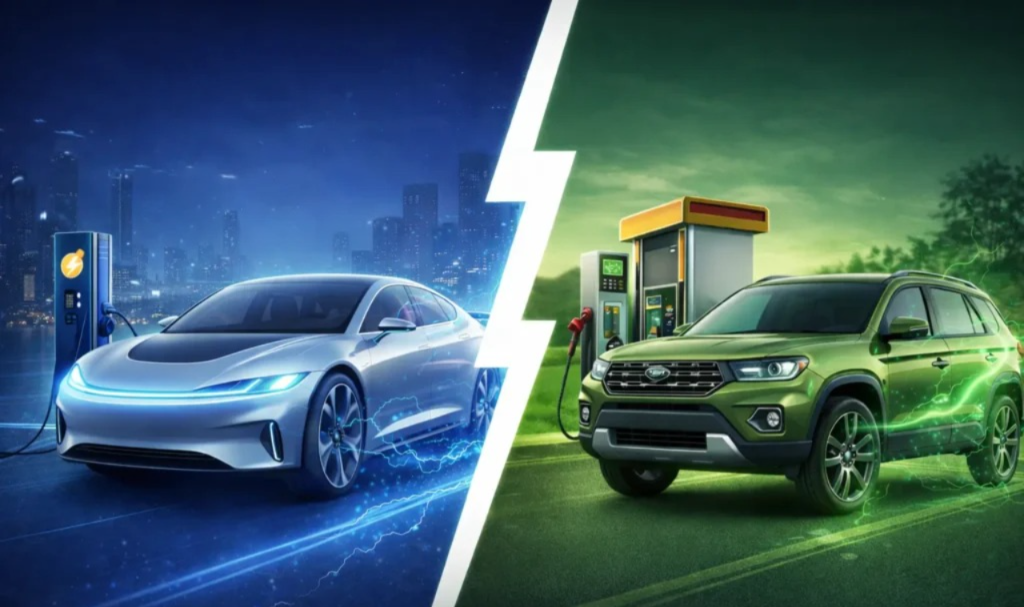
23 Jan 2026 • Payal
Hybrid vs. Electric (2026): Which Technology Saves More Money in the Long Run?
Thinking of buying a hybrid or an electric car in 2026? This blog explains which technology saves more money in the long run by comparing purchase cost, running expenses, maintenance, resale value, and real-life usage—while showing how carjd.com helps buyers make smarter car decisions.
Buying a car in 2026 is no longer just about looks, mileage, or brand. Today, one of the biggest questions buyers face is whether to choose a hybrid car or go fully electric. With rising fuel prices, increasing electricity adoption, government incentives, and growing environmental awareness, this decision feels more important than ever.
Many buyers ask a very simple question: Which option will save me more money in the long run?
The answer is not as straightforward as “electric is cheaper” or “hybrid is safer.” It depends on how you drive, where you live, how long you plan to keep the car, and how well you understand the total cost of ownership.
Understanding the Basics: Hybrid and Electric Cars Explained Simply
Before comparing money, it’s important to clearly understand what hybrid and electric cars actually are.
A hybrid car uses two power sources: a petrol engine and an electric motor. The car automatically switches between them or uses both together. At low speeds or in traffic, it often runs on electricity. At higher speeds, the petrol engine takes over. You don’t need to plug most hybrids into a charger. They recharge their battery automatically while driving.
An electric car (EV) runs completely on electricity. There is no petrol engine at all. You charge the car using a home charger or a public charging station. Once charged, the car runs silently and smoothly without burning fuel.
Both technologies aim to reduce fuel usage and emissions, but they do so in different ways—and that difference affects your long-term costs.
The First Big Cost: Purchase Price in 2026
In 2026, electric cars are more common than ever, but they still cost more upfront compared to petrol or hybrid cars in many segments. The main reason is the battery. EV batteries are expensive, even though prices have reduced compared to earlier years.
Hybrid cars usually cost more than regular petrol cars but less than full electric cars. For many buyers, hybrids feel like a “middle ground”—not too expensive upfront and still fuel-efficient.
However, when you look only at the sticker price, you don’t see the full picture. Smart buyers compare total cost of ownership, not just the showroom price. This is where platforms like carjd.com become extremely useful. carjd.com allows buyers to compare not just prices, but long-term ownership costs, running expenses, and real-world user feedback.
Running Costs: Fuel vs. Electricity Over the Years
This is where electric cars start to shine.
Electricity is significantly cheaper than petrol or diesel in most regions. Charging an EV at home costs much less per kilometer than filling fuel. Over several years,
this difference becomes very noticeable.
Hybrid cars save fuel compared to petrol cars, especially in city traffic. However, they still depend on petrol. As fuel prices continue to rise, hybrid running costs also increase over time—just more slowly than conventional cars.
If you drive a lot every month, especially in cities, electric cars usually cost far less to run. If your usage is low or mostly highway-based, hybrids can still make financial sense.
On carjd.com, many users compare real-world running costs shared by owners, which helps new buyers estimate their actual monthly expenses instead of relying only on official figures.
Maintenance and Servicing: A Hidden Cost Many Ignore
Maintenance plays a huge role in long-term savings.
Electric cars have fewer moving parts. There is no engine oil, no clutch, no gearbox in the traditional sense. This means fewer things can break. Servicing costs for EVs are usually much lower over time.
Hybrid cars still have engines, oil changes, filters, and mechanical parts—along with an electric system. This makes them more complex. While hybrids are reliable, maintenance costs are generally higher than EVs in the long run.
That said, hybrids have been around longer than EVs in some markets, so service networks are well established. EV servicing is simpler but still depends on brand support and availability of trained technicians.
On carjd.com, buyers can compare service costs, warranty details, and ownership reviews, which helps avoid surprises after purchase.
Battery Life and Replacement: The Biggest Fear Explained
One of the most common fears about electric cars is battery replacement cost. It’s a valid concern—but often misunderstood.
In 2026, EV batteries are much more durable than earlier generations. Most manufacturers offer long warranties, often 8 years or more. For many owners, the battery lasts the entire ownership period without needing replacement.
Hybrid batteries are smaller and cheaper to replace, but they also degrade over time. While replacement costs are lower than EV batteries, they still add to long-term ownership cost.
The key point is this: battery replacement is rarely needed during normal ownership, especially if the car is used properly. carjd.com regularly publishes ownership insights and comparisons that help buyers understand real-world battery performance instead of relying on fear-based assumptions.
Charging Infrastructure vs. Fuel Availability
In 2026, charging infrastructure has improved significantly, especially in cities and on major highways. Home charging has become common, and many buyers charge overnight just like a mobile phone.
If you have access to home charging, an electric car becomes extremely convenient and economical. You start every day with a “full tank” at a much lower cost.
Hybrid cars don’t require charging infrastructure at all. This makes them appealing for people living in areas where charging stations are still limited or for those who travel frequently to remote locations.
This is where lifestyle matters more than technology. carjd.com helps buyers filter cars based on city, usage pattern, and infrastructure availability—making the decision more practical and personal.
Resale Value in 2026 and Beyond
Resale value is changing rapidly.
Earlier, buyers worried that EVs would lose value quickly. But in 2026, demand for used electric cars is increasing, especially for models with good range and battery health reports.
Hybrid cars still enjoy stable resale because they are familiar and trusted. However, as fuel prices rise and EV adoption grows, resale trends are slowly shifting.
Platforms like carjd.com track market trends, resale values, and buyer demand, helping owners understand how their car choice may perform financially even when they decide to sell.
Environmental Savings Also Mean Financial Savings
While this blog focuses on money, it’s impossible to ignore environmental impact.
Electric cars produce zero tailpipe emissions. In many regions, governments offer tax benefits, toll discounts, and incentives for EV owners. These benefits directly translate into savings.
Hybrid cars reduce emissions but still burn fuel. Incentives for hybrids are often lower or reducing in some regions as governments push for full electrification.
Over time, policy support is likely to favor electric vehicles more strongly, making them financially smarter in the long run.
Who Saves More Money: Hybrid or Electric?
There is no one-size-fits-all answer, but patterns are clear.
Electric cars usually save more money in the long run if you:
- Drive frequently Mostly drive in cities
- Have home charging Plan to keep the car for many years
Hybrid cars make sense if you:
- Drive moderate distances Travel long highways often
- Don’t have easy access to charging Want lower upfront cost with fuel savings
carjd.com helps buyers answer these questions honestly by offering comparison tools, ownership reviews, and real-world data instead of marketing promises.
Frequently Asked Questions (FAQs)
Q1 Are electric cars really cheaper in the long run?
Yes, for many users, lower fuel and maintenance costs lead to significant savings over time.
Q2 Is a hybrid safer for someone buying their first eco-friendly car?
Hybrids feel familiar and are easier for some buyers, but EVs are simpler to maintain once charging is sorted.
Q3 What about battery replacement cost?
Most owners never replace the battery during ownership. Warranties cover long durations.
Q4 Does carjd.com help compare hybrids and EVs?
Yes, carjd.com helps users compare price, running cost, ownership experience, and long-term value.
Q5 Will EV resale value improve?
In 2026, EV resale demand is increasing, especially for reliable models with good range.
Q6 Which is better for Indian conditions?
Both work well. The better choice depends on driving habits, charging access, and budget.
Conclusion: The Smarter Choice Is the Informed Choice
In 2026, the question is no longer “Should I go green?” but “Which green option suits my life and saves me more money?”
Electric cars generally win in long-term savings, especially for daily city users. Hybrid cars remain a strong option for those who want fuel efficiency without charging dependence.
The smartest buyers don’t guess—they compare, research, and plan. Platforms like carjd.com make this process easier by offering clear comparisons, honest reviews, and real ownership insights.
Before spending lakhs on your next car, take time to understand your usage, costs, and long-term goals. The right choice today can save you a lot of money tomorrow.