24 Nov 2025 • SuGanta International.
The Little Car with a Big Heart: Understanding the Tata Nano’s Sweet and Sour Journey
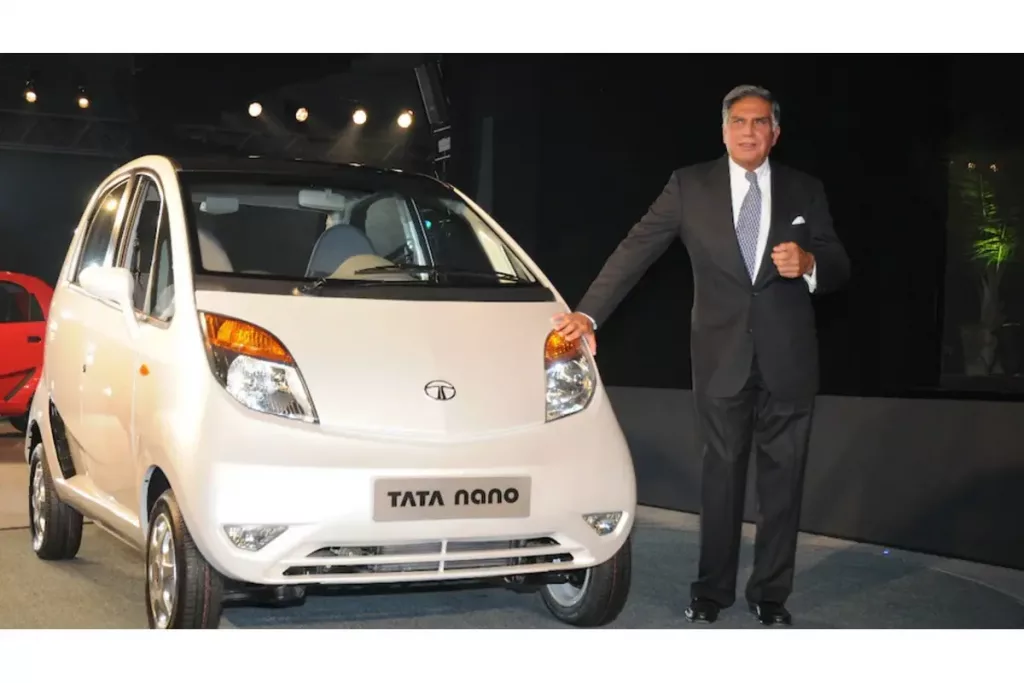
If you live in India, you probably have a memory of the Tata Nano. Maybe you saw one zipping through tight traffic, or maybe you remember the massive excitement when it was first announced.
The Nano wasn't just a car; it was an emotion. It was called the "People's Car." But today, we don't see many new ones on the road. So, what happened? Was it a failure, or was it a misunderstood success?
Let’s dive into the story of the cute, egg-shaped car that shook the world.
The Dream: Where it all started
The story began with a rainy day and a vision. The late Ratan Tata, a man known for his kindness as much as his business sense, saw a family of four trying to balance on a single scooter in the pouring rain. It looked dangerous and uncomfortable.
He thought, "Why can’t Indian middle-class families afford a safe car?"
He didn't want to build a luxury ride. He wanted to build a safer alternative to a scooter. His goal was simple: A car for 1 Lakh Rupees.
When he announced this, the world laughed. "It's impossible," experts said. "You can't build a car for the price of a laptop."
The Success: Engineering Magic
When the Nano was unveiled in 2008, the laughter stopped. He actually did it.
Engineering Marvel:
The Nano was a masterclass in "Frugal Engineering." It had everything a car needed but stripped of everything unnecessary. The engine was in the back (like a Porsche!), it was spacious inside, and it had great fuel economy.
Global Respect: Suddenly, the whole world was looking at India. Tata Motors proved that Indian engineers could do what no one else could.
The Hype: For a brief moment, the Nano was the most famous car on the planet.
The Failure: The "Cheap" Tag
If the car was so good, why did sales drop? The answer lies in human psychology, not just mechanics.
1. The "Cheapest Car" Label In India, a car isn't just a mode of transport; it is a status symbol. It tells your neighbors, "I have arrived in life." Tata marketed the Nano as the "World’s Cheapest Car." While the intention was to show affordability, it backfired. People didn't want to be seen driving the "cheapest" thing on the road. It felt like a compromise, not an upgrade. If you buy a scooter, you are proud. If you bought a Nano, people asked, "Why didn't you buy a real car?"
2. The Factory Trouble The Nano got stuck in a massive political battle in Singur, West Bengal. Tata had to move the entire factory to Gujarat. This delayed the car by nearly two years. By the time it hit the roads, the excitement had cooled down, and raw material prices had gone up.
3. Safety Concerns In the early days, there were a few news reports of Nanos catching fire. Although Tata fixed the issue quickly, the damage was done. It scared away the family buyers it was meant to protect.
The Verdict: Was it really a failure?
Commercially? Yes. It lost money, and sales never hit the millions Ratan Tata hoped for.
But in terms of vision? No.
The Nano taught Tata Motors how to build passenger cars efficiently. The lessons learned from the Nano helped Tata build their current successes like the Tiago and the Nexon.
Moreover, for the people who actually bought the Nano, it was a loyal friend. Ask any Nano owner, and they will tell you: "It is the easiest car to park, the AC is chilling, and it fits everywhere."
The Lesson
The Tata Nano is a classic lesson in marketing. The product was brilliant, but the positioning was wrong.
If it had been sold as a "Smart City Car" or a "Cool Youth Car" instead of a "Poor Man's Car," the story might have been different.
Today, the Nano is becoming a bit of a collector's item. People are converting them into EVs, painting them bright colors, and treating them with love. The "People's Car" may have stopped production, but the big dream behind the little car will always be remembered.